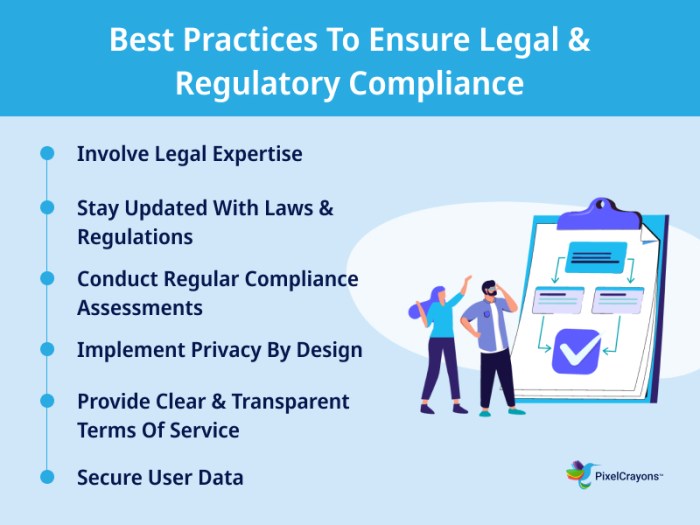
Embark on a journey through the realm of Legal Compliance Best Practices, where businesses strive to uphold integrity and adherence to regulations in a compelling manner.
Explore the key aspects of legal compliance, from its significance to the challenges faced by organizations, and the consequences of non-compliance.
Legal Compliance Best Practices

Legal compliance is a critical aspect of running a business, ensuring that organizations adhere to laws, regulations, and standards set by governing bodies. Failing to comply with legal requirements can result in severe consequences such as fines, lawsuits, and damage to reputation. Therefore, implementing effective legal compliance practices is essential for the smooth functioning and sustainability of any business.
Key Elements of an Effective Legal Compliance Program
- Establishing clear policies and procedures to ensure compliance with relevant laws and regulations.
- Regular training and education for employees to increase awareness and understanding of legal requirements.
- Monitoring and auditing processes to identify any potential compliance issues and address them promptly.
- Appointing a compliance officer or team responsible for overseeing and enforcing compliance efforts.
- Maintaining accurate records and documentation to demonstrate compliance with legal requirements.
Common Challenges Faced by Organizations in Maintaining Legal Compliance
- Keeping up with changing laws and regulations that may vary by industry or jurisdiction.
- Ensuring consistent adherence to compliance policies and procedures throughout the organization.
- Managing data privacy and cybersecurity requirements to protect sensitive information.
- Balancing compliance efforts with operational efficiency and business growth goals.
Consequences for Non-Compliance with Legal Regulations
- Financial penalties and fines imposed by regulatory authorities.
- Lawsuits from customers, employees, or other stakeholders affected by non-compliance.
- Reputational damage leading to loss of trust and credibility in the market.
- Potential criminal charges for serious violations of the law.
Implementing Legal Compliance Measures
Implementing legal compliance measures within an organization is crucial to ensure adherence to laws and regulations. It involves integrating these measures into company policies and procedures, providing adequate training to employees, leveraging technology for monitoring and reporting, and showcasing successful implementation examples.
Integrating Legal Compliance into Company Policies and Procedures
One of the key strategies for implementing legal compliance measures is to embed them within the company’s policies and procedures. This involves clearly outlining the legal requirements that need to be followed by employees at all levels of the organization.
- Regularly review and update policies to reflect any changes in laws and regulations.
- Ensure that legal compliance is a priority in decision-making processes.
- Establish clear reporting mechanisms for any violations or concerns related to legal compliance.
Training Employees on Legal Compliance Requirements
Training employees on legal compliance requirements is essential to ensure that they understand their responsibilities and obligations. This helps in mitigating risks and fostering a culture of compliance within the organization.
- Provide regular training sessions on relevant laws and regulations.
- Offer resources such as online courses, workshops, and manuals to enhance employee knowledge.
- Encourage open communication channels for employees to seek clarification on legal compliance issues.
Role of Technology in Facilitating Legal Compliance Monitoring and Reporting
Technology plays a significant role in simplifying legal compliance monitoring and reporting processes. It enables organizations to track compliance metrics, generate reports, and identify areas that require improvement.
- Implement compliance management software to streamline monitoring activities.
- Utilize data analytics tools to identify trends and patterns in compliance data.
- Automate reporting processes to ensure timely and accurate submission of compliance reports.
Successful Implementation of Legal Compliance Measures in Organizations
Several organizations have successfully implemented legal compliance measures, setting examples for others to follow. These success stories showcase the importance of prioritizing legal compliance and integrating it into the organizational culture.
- XYZ Corporation established a dedicated compliance team to oversee all legal requirements and ensure adherence.
- ABC Company conducted regular audits to assess compliance levels and address any gaps proactively.
- 123 Organization leveraged technology to create a centralized compliance repository for easy access to relevant information.
Monitoring and Auditing Legal Compliance
Regular audits are a crucial component of maintaining legal compliance within an organization. These audits involve a systematic review of policies, procedures, and practices to ensure they align with current laws and regulations. The process typically includes examining documentation, interviewing key personnel, and assessing the effectiveness of existing compliance measures.
Conducting Regular Audits
Regular audits should be conducted at predetermined intervals to monitor compliance efforts effectively. These audits can be performed by internal or external auditors, depending on the size and complexity of the organization. Internal audits are carried out by employees within the organization, while external audits are conducted by third-party firms or regulatory bodies.
Role of Internal and External Audits
Internal audits help organizations identify areas of non-compliance and address them proactively. They also assist in evaluating the efficiency of internal controls and compliance programs. On the other hand, external audits provide an independent assessment of compliance efforts and ensure transparency and objectivity in the auditing process.
Importance of Documentation
Documenting compliance efforts is essential for audits and regulatory purposes. Proper documentation helps demonstrate that the organization has taken necessary steps to comply with relevant laws and regulations. It also serves as evidence of due diligence in the event of an audit or investigation.
Tips for Addressing Non-Compliance
- Take immediate corrective action to rectify non-compliance issues identified during audits.
- Implement additional training or awareness programs to prevent similar issues in the future.
- Update policies and procedures to reflect changes in laws or regulations to avoid future non-compliance.
- Regularly review and monitor compliance efforts to ensure sustained adherence to legal requirements.
Legal Consultation
Seeking legal consultation is crucial for ensuring compliance with regulations as it helps organizations navigate complex legal requirements, minimize legal risks, and maintain a good reputation in the market. Legal consultants provide expert advice on interpreting and applying laws, regulations, and industry standards to specific situations, ensuring that businesses operate within the confines of the law.
Benefits of Legal Consultation
- Expertise: Legal consultants have specialized knowledge and experience in various areas of law, allowing them to provide accurate and up-to-date advice on compliance matters.
- Risk Mitigation: By seeking legal consultation, organizations can identify and mitigate legal risks before they escalate, reducing the likelihood of costly legal disputes or penalties.
- Customized Solutions: Legal consultants can develop tailored compliance strategies that align with the unique needs and challenges of specific industries, ensuring practical and effective compliance measures.
- Confidentiality: Legal consultants adhere to strict confidentiality standards, protecting sensitive information and privileged communications between the consultant and the organization.
In-House Legal Teams vs. External Legal Consultants
- In-House Legal Teams: In-house legal teams offer the benefit of immediate accessibility and a deep understanding of the organization’s operations. However, they may lack specialized expertise in certain areas of law and could face conflicts of interest.
- External Legal Consultants: External legal consultants bring unbiased perspectives, specialized knowledge, and experience from working with various clients across industries. They offer a fresh outlook and can provide objective advice on compliance matters.
Role of Legal Consultants in Compliance Strategies
Legal consultants play a key role in developing compliance strategies tailored to specific industries by conducting risk assessments, interpreting regulations, drafting policies and procedures, providing training to employees, and conducting audits to ensure ongoing compliance. They work closely with organizations to understand their unique challenges and goals, offering practical solutions to achieve and maintain compliance.
Scenarios Where Legal Consultation is Beneficial
- During mergers and acquisitions to assess legal risks and ensure compliance with antitrust and competition laws.
- When expanding operations into new markets to navigate regulatory requirements and international laws.
- In response to regulatory investigations or enforcement actions to mitigate potential penalties and sanctions.
- When developing data privacy and cybersecurity programs to comply with evolving regulations and protect sensitive information.
In conclusion, Legal Compliance Best Practices serve as the cornerstone for businesses to operate ethically and efficiently, guiding them towards sustainable success in a complex regulatory landscape.
Clarifying Questions
How can legal compliance benefit businesses?
Legal compliance ensures that businesses operate ethically, avoid legal issues, and maintain a positive reputation.
What are the key elements of an effective legal compliance program?
An effective legal compliance program includes clear policies, regular training, monitoring mechanisms, and documentation of compliance efforts.
Why is it important to document compliance efforts for audits?
Documenting compliance efforts provides evidence of adherence to regulations, which is crucial for audits and regulatory purposes.