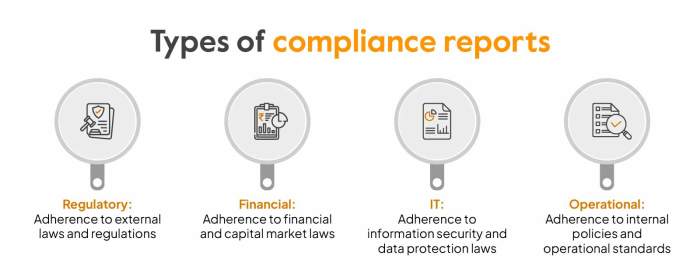
Embark on a journey through the realm of Legal Compliance for Financial Reporting, where precision and adherence to regulations are paramount for success.
Exploring the significance of legal compliance, key governing laws, consequences of non-compliance, and best practices will shed light on this crucial aspect of financial reporting.
Legal Compliance for Financial Reporting
Legal compliance in financial reporting is crucial for maintaining transparency, accuracy, and accountability in business operations. It ensures that financial statements are prepared in accordance with applicable laws and regulations, providing reliable information to stakeholders for decision-making.
Key Regulations and Laws
- The Sarbanes-Oxley Act (SOX): Enacted in 2002, SOX aims to protect investors by improving the accuracy and reliability of corporate disclosures.
- Generally Accepted Accounting Principles (GAAP): These are a set of accounting standards used to guide financial reporting in the United States.
- International Financial Reporting Standards (IFRS): These standards provide a global framework for financial reporting, promoting consistency and comparability.
Consequences of Non-Compliance
- Financial penalties and fines imposed by regulatory authorities.
- Loss of investor trust and confidence, leading to a decline in stock value.
- Litigation risks and legal consequences for executives and companies.
Best Practices for Ensuring Legal Compliance
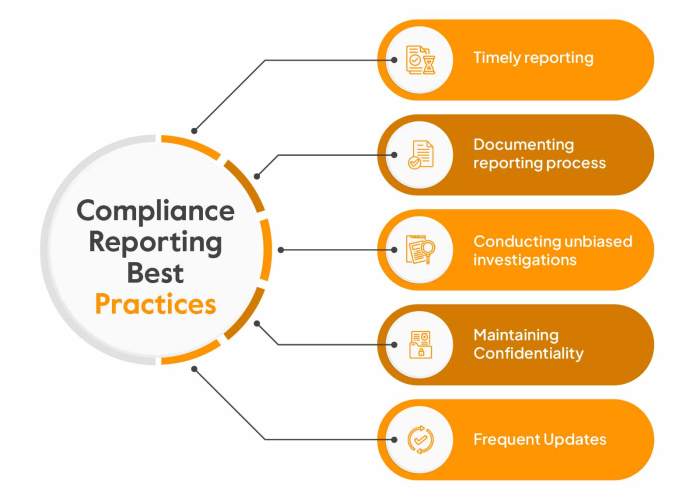
- Stay informed about regulatory changes and updates in financial reporting standards.
- Implement robust internal controls to detect and prevent errors or fraud in financial reporting.
- Engage legal and accounting professionals to review financial statements for compliance with relevant laws and regulations.
- Educate employees on their responsibilities in financial reporting to maintain accuracy and integrity.
Legal Consultation
Legal consultation in the context of financial reporting involves seeking advice and guidance from legal experts to ensure compliance with relevant laws and regulations. Legal consultants provide valuable insights and assistance in interpreting complex legal requirements and addressing potential issues related to financial reporting.
Examples of Situations Requiring Legal Consultation
- Interpreting new financial regulations and their impact on reporting practices
- Resolving disputes or legal challenges related to financial disclosures
- Navigating international financial reporting standards and legal requirements
- Addressing legal implications of financial misstatements or fraud
Role of Legal Consultants in Ensuring Compliance
Legal consultants play a crucial role in helping organizations navigate the legal landscape surrounding financial reporting. They provide guidance on regulatory requirements, assist in drafting accurate disclosures, and offer support in responding to legal inquiries or investigations. By leveraging their expertise, legal consultants help companies adhere to legal standards and mitigate the risk of non-compliance.
Benefits of Legal Consultation in Mitigating Risks
-
Legal consultants can identify potential legal pitfalls in financial reporting practices and recommend strategies to address them proactively.
-
By staying informed about legal developments, consultants can help organizations adapt their reporting processes to comply with changing regulations.
-
Legal consultation can enhance transparency and credibility in financial reporting, reducing the likelihood of legal challenges or regulatory sanctions.
Summing up the intricate web of Legal Compliance for Financial Reporting, it’s evident that staying compliant is not just a requirement but a foundation for trust and credibility in the financial world.
Quick FAQs
What are the repercussions of not complying with financial reporting regulations?
Non-compliance can lead to hefty fines, legal penalties, reputational damage, and loss of investor trust.
How can companies ensure legal compliance in financial reporting?
Companies can implement robust internal controls, conduct regular audits, stay updated on regulations, and seek legal consultation when needed.
What role do legal consultants play in ensuring compliance with financial reporting regulations?
Legal consultants provide expertise in interpreting complex regulations, offer guidance on compliance strategies, and help navigate legal requirements effectively.


